Honda Tests Roads That Wirelessly Charge Moving EVs
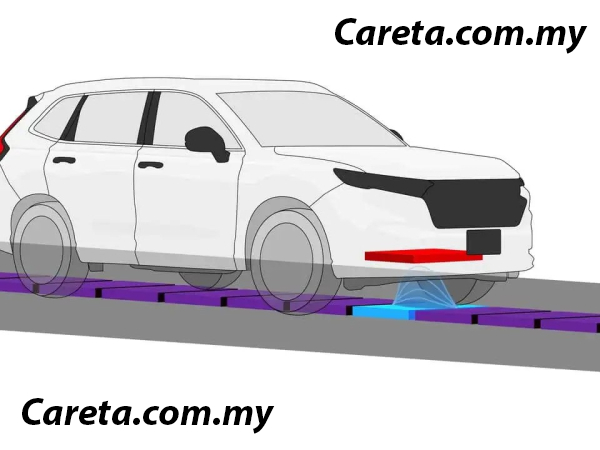
The Honda dynamic wireless road charging system is an in-motion electric vehicle (EV) charging technology developed by Honda in partnership with Taisei Corporation and Taisei Rotec. Categorised as dynamic wireless power transfer infrastructure, it transmits direct current (DC) electrical energy from roadbed coils to vehicle receivers via magnetic coupling, eliminating the need to halt for physical cable connection. While engineered initially for heavy logistics fleets in Japan, the technology targets long-term range and charging downtime bottlenecks relevant to high-mileage commercial transport and intercity highway corridors such as Malaysia's North-South Expressway (PLUS).
Key Facts
| Attribute | Value |
| Technology Name | Dynamic Wireless EV Road Charging System |
| Developers | Honda, Taisei Corporation, Taisei Rotec |
| System Power Architecture | Direct Current (DC) power supply |
| Target Peak Power Output | Up to 150 kW |
| Surface Durability Rating | Tested up to 20-tonne vehicle capacity; 1,000,000 wheel load cycles at 5 tonnes per wheel |
| Public Highway Trial Distance | 300 metres (E14 Tateyama Expressway, Japan) |
| Endurance Testing Schedule | Late 2026 (T-FIELD/TAMURA site) |
| Public Highway Trial Launch | Fiscal year 2027 (commencing 1 April 2027) |
| Initial Target Fleet | Commercial logistics lorries and heavy commercial vehicles |
| Malaysian Pricing / Installation Cost | Unspecified (long-term deployment and maintenance costs remain under evaluation) |
| Local Compatibility / Regulatory Status | Pending international trials; Sirim certification and local grid standardisation not yet established |
How Do Wireless Charging Roads Power Moving Electric Vehicles?
Wireless charging roads power moving EVs by generating an electromagnetic field through transmission coils embedded beneath the road surface. As a compatible vehicle travels over these sections, an underbody receiver unit captures the magnetic field and converts it into direct current electricity, replenishing the vehicle battery pack dynamically without physical cables.
According to technical details reported via Motor1, Honda designed both the subterranean transmission hardware and the vehicle receiver unit. The system integrates an inverter and coil into a single package, reducing civil installation complexity on existing roadbeds. Taisei Corporation supplies the fast-response direct current (DC) power distribution system, while Taisei Rotec engineered the structural mounting methodology to ensure the asphalt layer retains its mechanical integrity.
Motor1 / Careta The embedded transmission coils generate a magnetic field, while the receiver unit on the vehicle converts energy from that field into electricity to charge the battery pack.
Honda developed the first dynamic wireless charging unit that integrates an inverter and coil into a single package to streamline retrofitting on existing roads.
Can Roadway Charging Coils Withstand Heavy Vehicle Traffic?
Roadway charging coils can withstand heavy commercial vehicle traffic by employing reinforced civil embedding techniques designed to preserve structural asphalt strength. Previous testing conducted at Taisei's Satte facility confirmed that the embedded components and surface layers support vehicles weighing up to 20 tonnes without surface degradation or component failure.
To establish long-term viability before deployment on public routes, engineers scheduled an intensive endurance evaluation beginning in late 2026 at Taisei's T-FIELD/TAMURA test facility. The protocol subjects the embedded hardware to 1,000,000 wheel load cycles using production vehicles applying 5 tonnes of load per wheel, simulating multiple years of road wear over a compressed timeframe. Engineers also monitor electromagnetic field leakage throughout testing to verify civil safety thresholds prior to general public adoption.
The dynamic roadbed charging hardware is engineered to endure 1,000,000 wheel load cycles at 5 tonnes per wheel to simulate years of heavy commercial traffic.
What Are the Power Output Targets and Highway Trial Plans?
The system targets wireless power transfer rates of up to 150 kW to service large commercial vehicles operating at standard expressway speeds. Following durability validation, Honda, Taisei Corporation, and Taisei Rotec plan to execute a 300-metre operational trial along Japan's E14 Tateyama Expressway near the Kimitsu rest area starting in fiscal year 2027.
Honda initiated fundamental dynamic wireless power research in 2021 before partnering with Taisei Corporation and Taisei Rotec in 2025 to focus on magnetic coupling road infrastructure. The trial will operate under East Nippon Expressway's (NEXCO East) Tateyama Project starting on or after 1 April 2027. Primary evaluation metrics focus on energy transfer efficiency relative to highway vehicle speeds, alongside civil installation expenditure and ongoing surface maintenance requirements.
Honda and NEXCO East will test dynamic wireless EV charging across a 300-metre section of the E14 Tateyama Expressway in fiscal year 2027.
Who Is This For in Malaysia?
This dynamic wireless road charging technology is primarily relevant for commercial fleet operators, interstate logistics hauliers, and highway concessionaires operating across Malaysia's heavy transport networks. For long-haul logistics corridors like the North-South Expressway (PLUS), dynamic in-motion charging offers a structural alternative to stationary high-output DC fast chargers, which frequently encounter grid capacity bottlenecks and require prolonged vehicle downtime.
For Malaysian private EV drivers—particularly urban residents in high-density Kuala Lumpur condominiums where installing dedicated 240V home chargers requires management corporation approvals—widespread wireless roadbeds could theoretically lower reliance on home wallboxes. However, implementation across tropical Malaysian infrastructure requires testing against severe surface waterlogging during monsoon seasons, extreme asphalt temperatures exceeding 50 degrees Celsius, and compatibility with local Sirim electrical safety standards before commercial consideration.
Dynamic road charging addresses critical range constraints for long-haul freight corridors along high-traffic Malaysian transit arteries like the North-South Expressway.
Common Questions
When will dynamic wireless road charging become operational on public highways?
Public testing is scheduled to commence in fiscal year 2027, beginning 1 April 2027, on a 300-metre test stretch of the E14 Tateyama Expressway in Japan, following pre-trial endurance assessments in late 2026.
What charging speeds can electric vehicles achieve on these roads?
The project targets energy transfer rates of up to 150 kW, specifically calibrated to charge heavy-duty commercial hauliers and electric passenger vehicles travelling at standard expressway cruising speeds without stopping.
Will passenger electric cars be able to use Honda's wireless charging lanes?
While the initial deployment targets commercial logistics lorries, Honda plans to expand receiver hardware integration to passenger models, including future electric sport utility vehicles (SUVs), once commercial feasibility is established.
Sources and Methodology
This article synthesises source material originally reported by Qalif Latif for Careta on 7 October 2026 ("Honda bangunkan jalan yang boleh mengecas EV ketika bergerak"), referencing primary industry disclosures and technical reports from Motor1, Honda Motor Co., Ltd., Taisei Corporation, and Taisei Rotec. Technical facts regarding power transfer capacity, test cycle parameters, and expressway trial locations reflect the source disclosures directly. Structural implications for Malaysian logistics and road conditions are contextualised against national grid and highway operational standards. This article was last updated on 07 October 2026. Information specific to Malaysia was verified against Careta reporting and regional automotive technical data.